
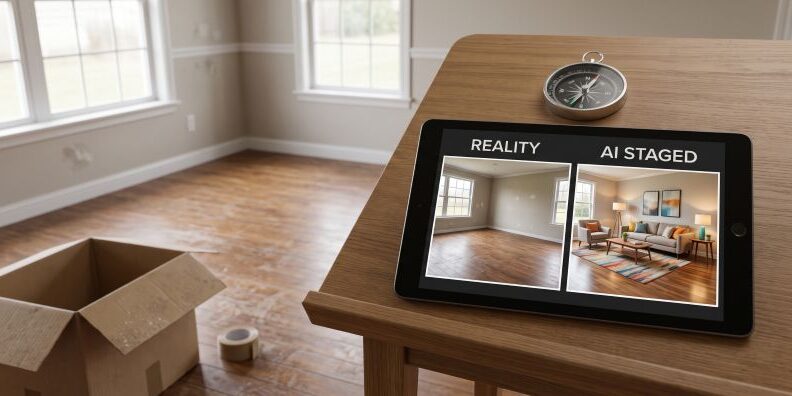
In today’s digital-first real estate market, online property listings serve as the virtual front door for prospective home buyers. While virtual staging and digital photo enhancements have become increasingly popular, the rise of advanced artificial intelligence (AI) tools has sparked an intense legal and ethical debate over how far digital editing can go before it crosses the line into deceptive marketing.
When listing photos feature digitally altered wall colors, AI-generated furniture, or modified structural elements, it raises a crucial question for Texas home buyers and real estate professionals: Is AI image editing a helpful visualization tool, or is it fundamentally misleading?
Virtual Staging vs. Deceptive Alterations
There is a distinct legal and practical line between helping a buyer visualize a space and misrepresenting the actual condition of a property.
- Permissible Virtual Staging: Adding digital furniture, rugs, or decor to an empty room allows prospective buyers to better understand scale, layout, and potential room functionality. When executed transparently, virtual staging helps buyers see past blank walls without altering the physical reality of the structure.
- Deceptive Property Alterations: Utilizing AI to change the color of custom paint jobs, cover up damaged flooring, digitally remove permanent fixtures, or alter structural elements may move beyond staging into false advertising. When a buyer views a listing online that features a completely different aesthetic or condition than what exists in person, the listing ceases to be an accurate marketing representation.
Attempting to “improve” a property’s appeal by digitally altering its physical characteristics is equivalent to a used car dealership using AI software to replace a bright orange, custom paint job with a sleek, factory-black finish on an online listing. In either case, presenting a digitally fabricated version of a product without clear authorization and disclosure creates an immediate risk of deceptive trade practices.
The Risk of Bait-and-Switch Claims
Using AI tools to alter a property’s true appearance without proper disclosure creates a classic “bait-and-switch” scenario. A buyer is enticed to spend time and resources visiting a home based on an online image, only to arrive and find a property in a drastically different physical state.
To mitigate liability, many real estate agents insert small disclaimers into the listing fine print, such as “Photos digitally staged” or “Images altered with AI.” However, from a legal standpoint, a buried or inconspicuous disclaimer may not fully protect a seller or listing broker if the overall impression of the advertisement remains inherently misleading.
Under Texas common law, a seller or broker who makes a material misrepresentation regarding a property’s true condition can face serious claims for fraudulent inducement or breach of contract. If a buyer relies on altered photographs to submit an offer or enter into a purchase agreement, discovering the discrepancy during the final walkthrough can trigger contract cancellations, earnest money disputes,
and potential civil litigation.
TREC Advertising Rules and Deceptive Trade Practices
In Texas, real estate license holders are subject to strict regulatory standards regarding property advertising. The Texas Real Estate Commission (TREC) strictly regulates marketing practices to ensure the public is protected from deceptive or false claims.
Under TREC Rule § 535.155, any advertisement published by a real estate license holder must be clear, truthful, and not misleading. Furthermore, Texas Occupations Code § 1101.652(b)(23) explicitly authorizes TREC to suspend or revoke the license of a broker or sales agent who publishes an advertisement that misrepresents a property or is likely to deceive the public.
Additionally, deceptive real estate advertising can trigger liability under the Texas Deceptive Trade Practices-Consumer Protection Act (DTPA) found in Texas Business and Commerce Code § 17.46. The DTPA explicitly prohibits:
- Representing that goods or real property have sponsorship, approval, characteristics, ingredients, uses, benefits, or quantities that they do not have.
- Representing that goods or real property are of a particular standard, quality, or grade if they are of another.
- Advertising goods or real property with intent not to sell them as advertised.
While using AI to remove temporary clutter or digitally stage vacant space is generally acceptable when clearly disclosed, using software to alter permanent finishes, conceal property defects, or fabricate non-existent features violates core Texas advertising laws. To avoid regulatory discipline and costly buyer disputes, sellers and real estate professionals must ensure that online listing photos always reflect the true, physical reality of the home.